Medical Oxygen Generators for Hospitals

Why Hospitals Must Rethink Oxygen Supply
Medical oxygen is one of the most critical utilities in any healthcare facility. From intensive care units to operating theatres and emergency departments, it underpins daily clinical operations and patient outcomes. Yet despite its importance, oxygen supply is often treated as a simple procurement item—managed mainly on price per cubic meter.
This approach is increasingly outdated.
Healthcare systems face rising energy costs, stricter regulatory requirements, and growing pressure to ensure operational resilience. At the same time, oxygen demand continues to increase due to expanding respiratory care, ageing populations, and more complex treatments.
In this context, hospitals can no longer afford to view oxygen as a commodity purchase alone. Instead, it must be managed as a strategic infrastructure decision, balancing cost, reliability, and long-term efficiency—especially when evaluating alternatives such as a medical oxygen generator or on-site oxygen generation for hospitals.
A key concept driving this shift is Total Cost of Ownership (TCO)—a broader perspective that includes not only the purchase price of oxygen, but also the hidden costs associated with storage, logistics, labour, and supply risk.
When analysed through this lens, traditional oxygen supply models reveal significant inefficiencies and highlight the value of oxygen generators for hospitals as a more efficient, resilient, and cost-effective solution.

Annual Oxygen Running Cost (€)
(Excluding initial capital expenditure)
Example based on a 300-bed hospital (~100,000 m³/year oxygen consumption). Values represent annual operating costs.
The total cost reflects a combination of key drivers, including oxygen supply (commodity), energy, logistics, labour, safety, service, and compliance-related activities.
Understanding Traditional Oxygen Supply Models
Most hospitals today rely on two primary oxygen supply methods: liquid oxygen (LOX) and compressed oxygen cylinders. While both are well-established and widely used, they share a critical limitation: a strong dependence on external supply chains.
Liquid Oxygen (LOX): Convenience with Hidden Complexity
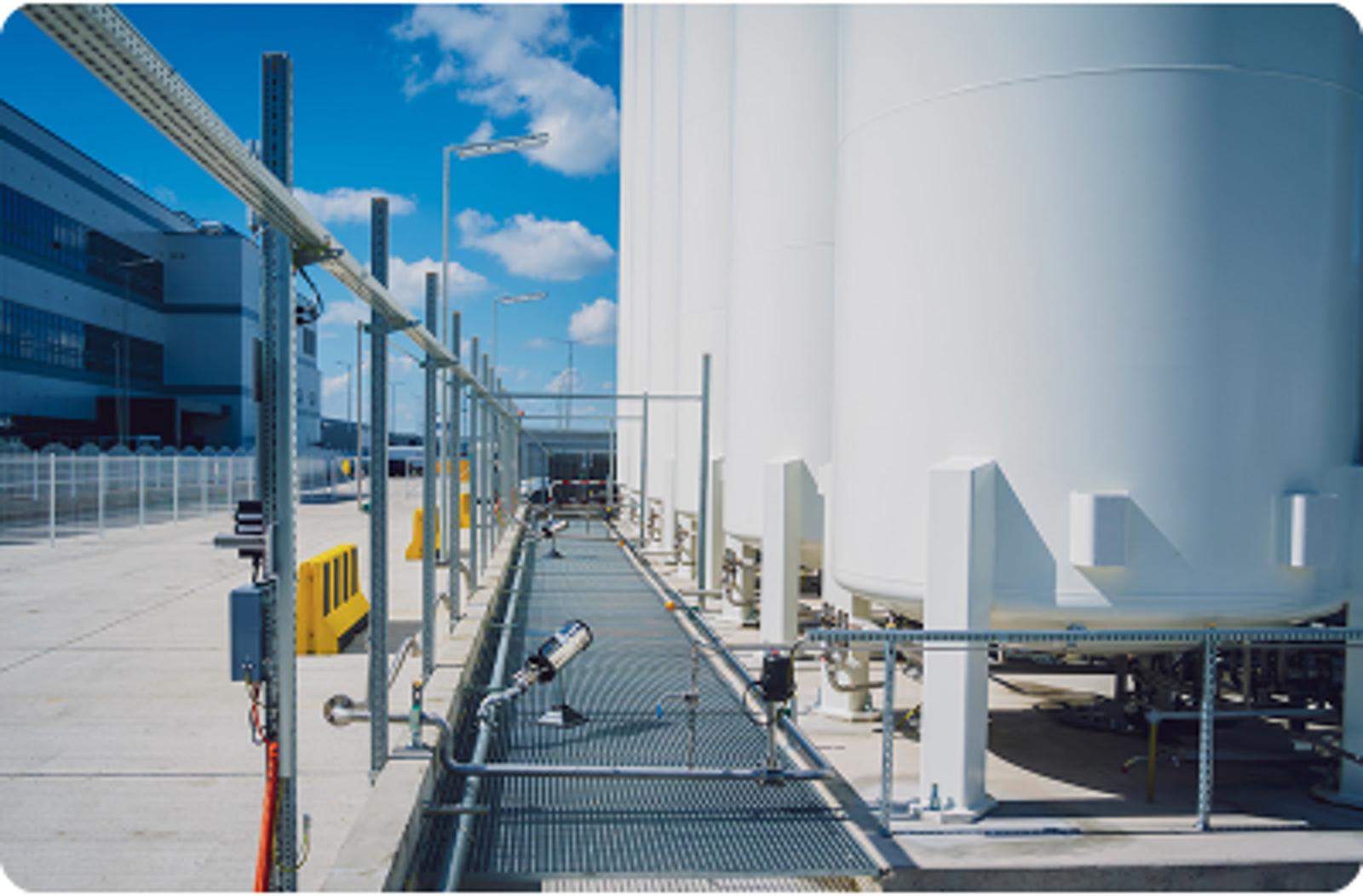
Liquid oxygen is typically delivered by tanker trucks and stored in cryogenic tanks on-site. From there, it is vaporised and distributed throughout the hospital’s pipeline network.
At first glance, this model appears efficient and relatively low-maintenance. However, several underlying factors significantly increase its real cost over time:
• Continuous evaporation losses (boil-off) during storage reduce usable oxygen volume
• Dependency on scheduled deliveries and supplier logistics introduces operational risk
• Additional costs such as tank rental, inspections, and regulatory compliance
• Contractual constraints, including minimum consumption clauses, can limit flexibility
Over time, these factors drive up the Total Cost of Ownership, often pushing the real cost of oxygen well beyond the nominal €/m³ price.
Compressed Oxygen Cylinders: Flexibility at a Cost
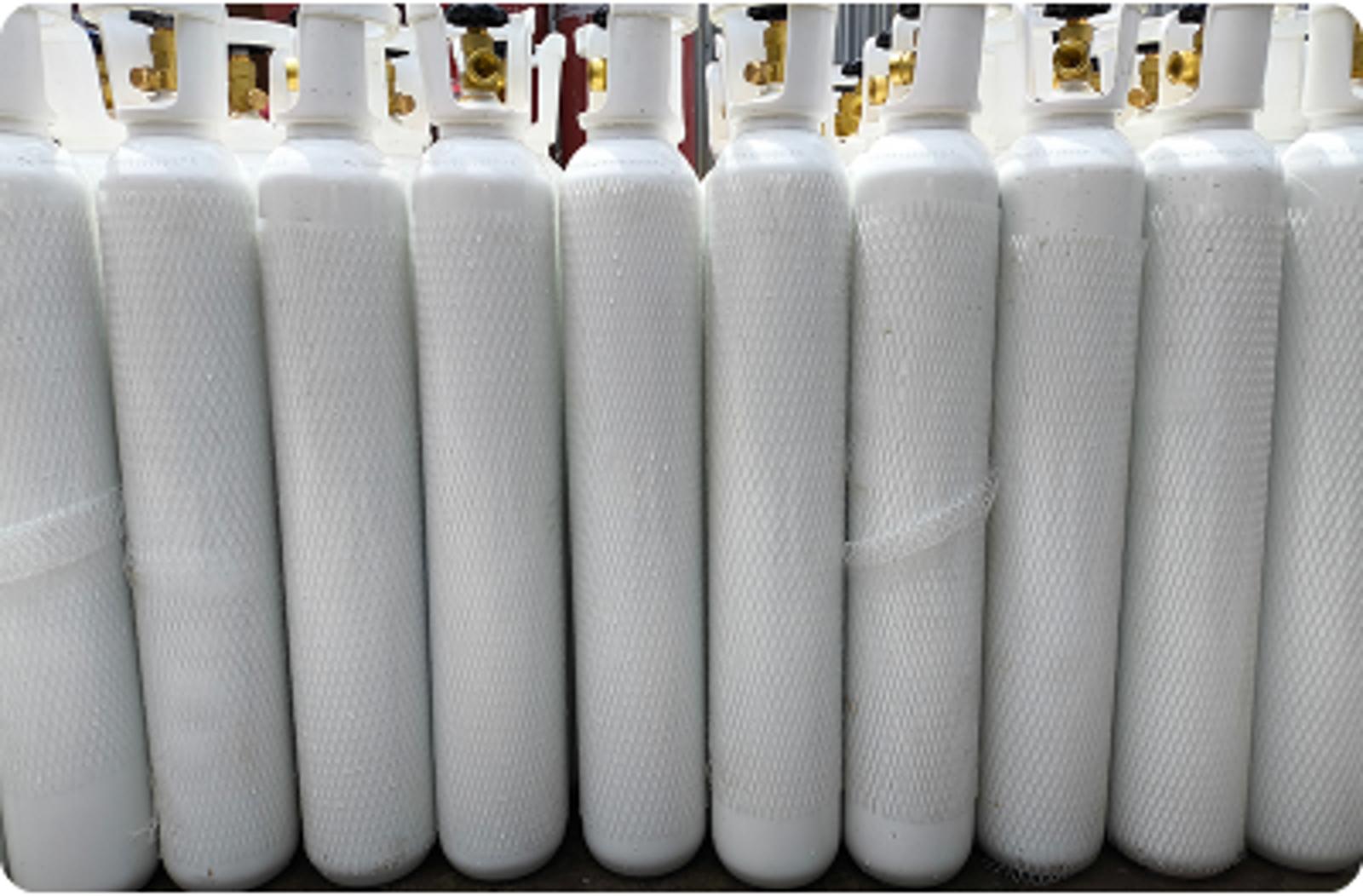
However, for medium and large hospitals, this approach quickly becomes operationally complex and resource-intensive. Managing frequent cylinder replacements, ensuring safe storage, and coordinating deliveries requires dedicated staff and robust internal processes.
In practice, oxygen cylinders are often:
• Highly labour-intensive, requiring continuous handling and monitoring
• Logistically demanding, due to frequent deliveries and stock management
• Costly at scale, especially when demand increases
These limitations make cylinders less suitable as a primary supply method for hospitals with growing oxygen needs—particularly when compared with solutions such as a medical oxygen generator.
The Core Limitation: Supply Dependency
Both LOX and cylinder systems rely heavily on external providers. This creates exposure to several operational and financial risks:
• Delivery delays or logistical disruptions that can compromise supply continuity
• Price fluctuations driven by energy markets and transportation costs
• Limited flexibility during demand peaks, increasing operational pressure
As recent global events have demonstrated, these vulnerabilities can quickly escalate into critical supply challenges.
For this reason, many healthcare facilities are now evaluating alternatives such as oxygen generators for hospitals and on-site oxygen generation, which offer greater autonomy, cost predictability, and long-term resilience.
The Shift to On-Site Generation: A New Approach
To address these limitations, an increasing number of hospitals are adopting on-site oxygen generation using PSA (Pressure Swing Adsorption) technology.
A PSA medical oxygen generator produces oxygen directly from compressed air. By separating nitrogen through adsorption, the system delivers a continuous flow of medical-grade oxygen into the hospital’s pipeline.
This fundamentally changes the supply model.
Instead of relying on deliveries, hospitals generate oxygen on demand, on-site, transforming oxygen from a purchased commodity into a controlled internal resource.
How PSA Medical Oxygen Generators Work
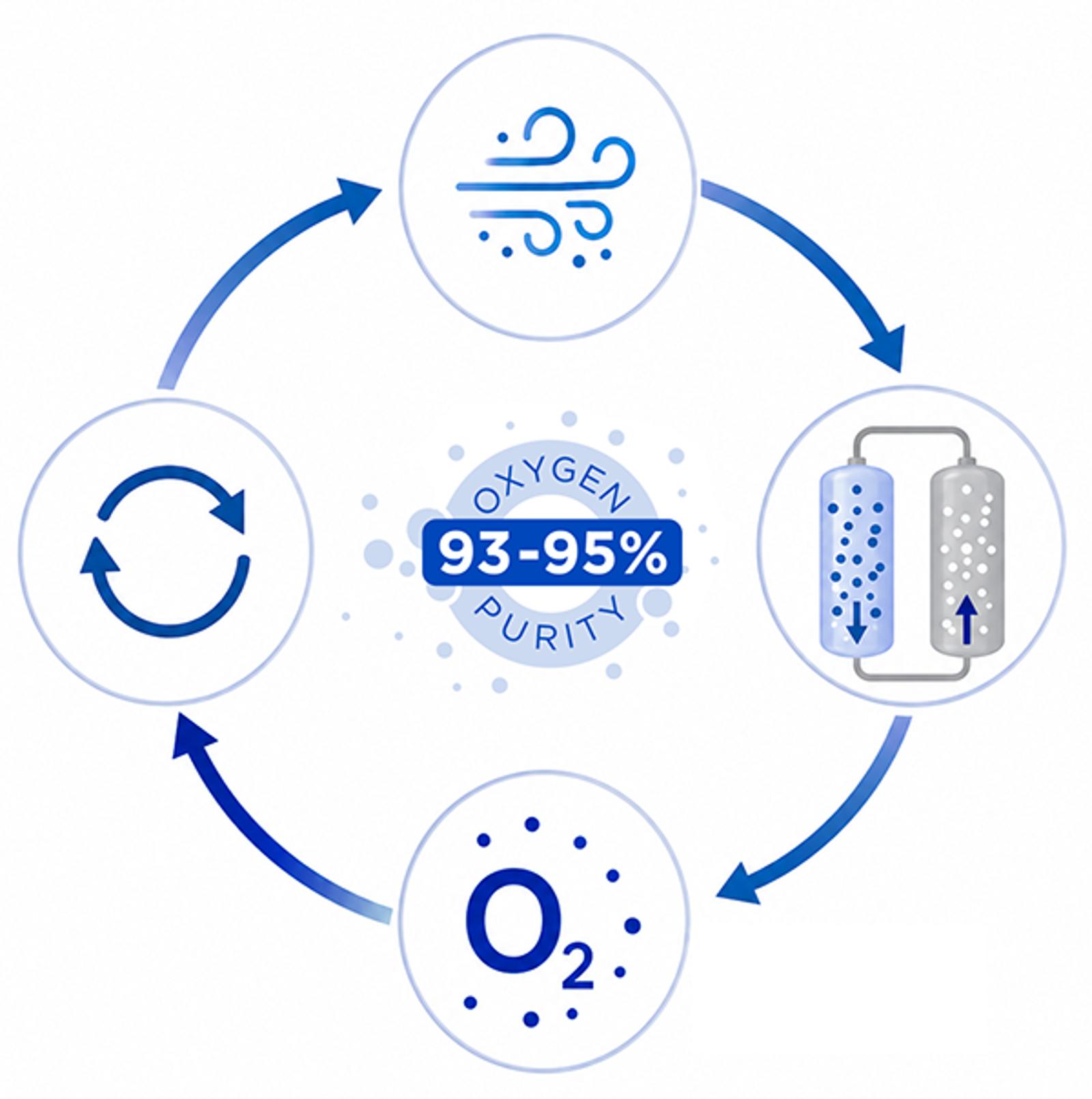
PSA technology operates through a cyclic process:
- Ambient air is compressed and filtered
- Nitrogen is adsorbed using a molecular sieve
- Oxygen is concentrated and delivered at 93% ± 3% purity
- The cycle repeats continuously to ensure a stable output
Modern systems are fully automated, with built-in monitoring of oxygen purity, pressure, and flow.
From an operational standpoint, the system functions much like other core hospital utilities—such as HVAC or medical vacuum systems—requiring only periodic maintenance and minimal manual intervention.
Total Cost of Ownership: Why PSA Changes the Equation
The key advantage of on-site oxygen generation lies in its ability to significantly reduce the Total Cost of Ownership.
Traditional supply models are built around recurring operational costs. Hospitals must continuously pay for oxygen deliveries, logistics, and associated inefficiencies.
By contrast, PSA systems involve:
• An initial capital investment
• Low and predictable ongoing operating costs, mainly electricity and maintenance
This restructuring of costs leads to substantial long-term savings.
Eliminating Hidden Costs
With PSA generation, several cost drivers are either reduced or eliminated:
• No delivery or transportation costs
• No storage-related losses, such as boil-off or residual gas
• Minimal labour requirements for handling and logistics
• Reduced administrative overhead
As a result, hospitals gain greater visibility and control over their oxygen expenses, particularly when adopting solutions such as oxygen generators for hospitals.
Financial Impact: ROI and Long-Term Savings

5-Year Oxygen Cost Comparison
Example based on a 300-bed hospital (~100,000 m³/year oxygen consumption). Values represent cumulative operating costs over a five-year period.
Over a five-year period, PSA systems deliver significantly lower cumulative costs compared to both liquid oxygen (LOX) and cylinder-based supply.
In a typical installation, a PSA medical oxygen generator requires an initial capital investment of approximately €170,000. However, annual savings can exceed €95,000 compared to traditional supply models, resulting in a payback period of less than two years.
While traditional supply costs continue to increase over time, on-site oxygen generation stabilizes operating expenses and enables long-term cost control.
One of the most compelling aspects of oxygen generators for hospitals is the speed of return on investment (ROI).
In a typical mid-sized hospital:
• Oxygen demand can reach ~100,000 m³ per year
• Savings compared to traditional supply can be substantial
In many cases, a PSA medical oxygen generator system can achieve:
• ROI in less than 2 years compared to LOX
• ROI in under 1 year compared to cylinders
These savings are driven not only by lower operating costs, but also by the elimination of inefficiencies inherent in delivery-based models.
Over a 5-year period, the financial impact becomes even more significant. Hospitals can reduce oxygen-related expenditures by hundreds of thousands of euros—funds that can be redirected toward patient care, medical equipment, or infrastructure improvements.
Cost Stability in a Volatile Market
Another key benefit is price predictability.
Delivered oxygen prices are influenced by:
• Energy market fluctuations
• Transport costs
• Supplier pricing strategies
In contrast, PSA systems rely primarily on electricity, making costs more stable and easier to forecast, especially when compared to traditional supply models.
This is particularly valuable in today’s economic environment, where energy volatility can significantly affect supply chain pricing.
Reliability and Operational Autonomy
Beyond cost considerations, reliability is a critical factor in oxygen supply decisions.
Hospitals cannot afford disruptions.
Traditional supply systems depend on logistics and external providers. Any interruption—such as delayed deliveries or supply shortages—can quickly become a serious operational risk.
PSA systems provide a different level of supply security.
By generating oxygen on-site, hospitals reduce their reliance on external supply chains and gain continuous, real-time availability.
As long as power and routine maintenance are ensured, oxygen supply remains stable.
Supporting Resilience Strategies
Modern healthcare regulations require redundancy in oxygen systems. PSA generators can be integrated into these frameworks in several ways:
- Combined with a backup LOX tank or cylinder system
- Installed in modular configurations (multiple units)
- Connected to emergency power systems
This ensures compliance while maintaining the benefits of on-site oxygen generation, particularly when using a PSA medical oxygen generator.
Safety and Simplicity in Daily Operations
Traditional systems involve handling high-pressure cylinders or storing large volumes of cryogenic liquid—both of which introduce operational risks.
PSA systems significantly reduce these challenges.
With lower storage requirements and automated processes, they:
- Minimise manual handling
- Reduce exposure to high-pressure hazards
- Simplify compliance with safety regulations
For facility teams, this translates into safer and more manageable operations.
A Smarter Oxygen Strategy for Modern Hospitals
The shift toward medical oxygen generators reflects a broader trend in healthcare: moving from reactive procurement to proactive infrastructure management.
Hospitals are increasingly looking for solutions that:
- Reduce operating costs
- Improve resilience
- Provide long-term scalability
PSA technology aligns with these goals by transforming oxygen into a controlled and reliable resource.
Rather than reacting to external supply conditions, hospitals can take ownership of their oxygen strategy—improving both financial performance and operational stability.