How Dissolved Oxygen Drives Profitability in Aquaculture

Why Oxygen Is More Than a Water Quality Parameter
In aquaculture, dissolved oxygen (DO) is often treated as a routine water quality parameter, monitored primarily to keep conditions within acceptable limits. However, this perspective underestimates its wider influence on production performance and farm profitability.
From Compliance Metric to Profit Driver
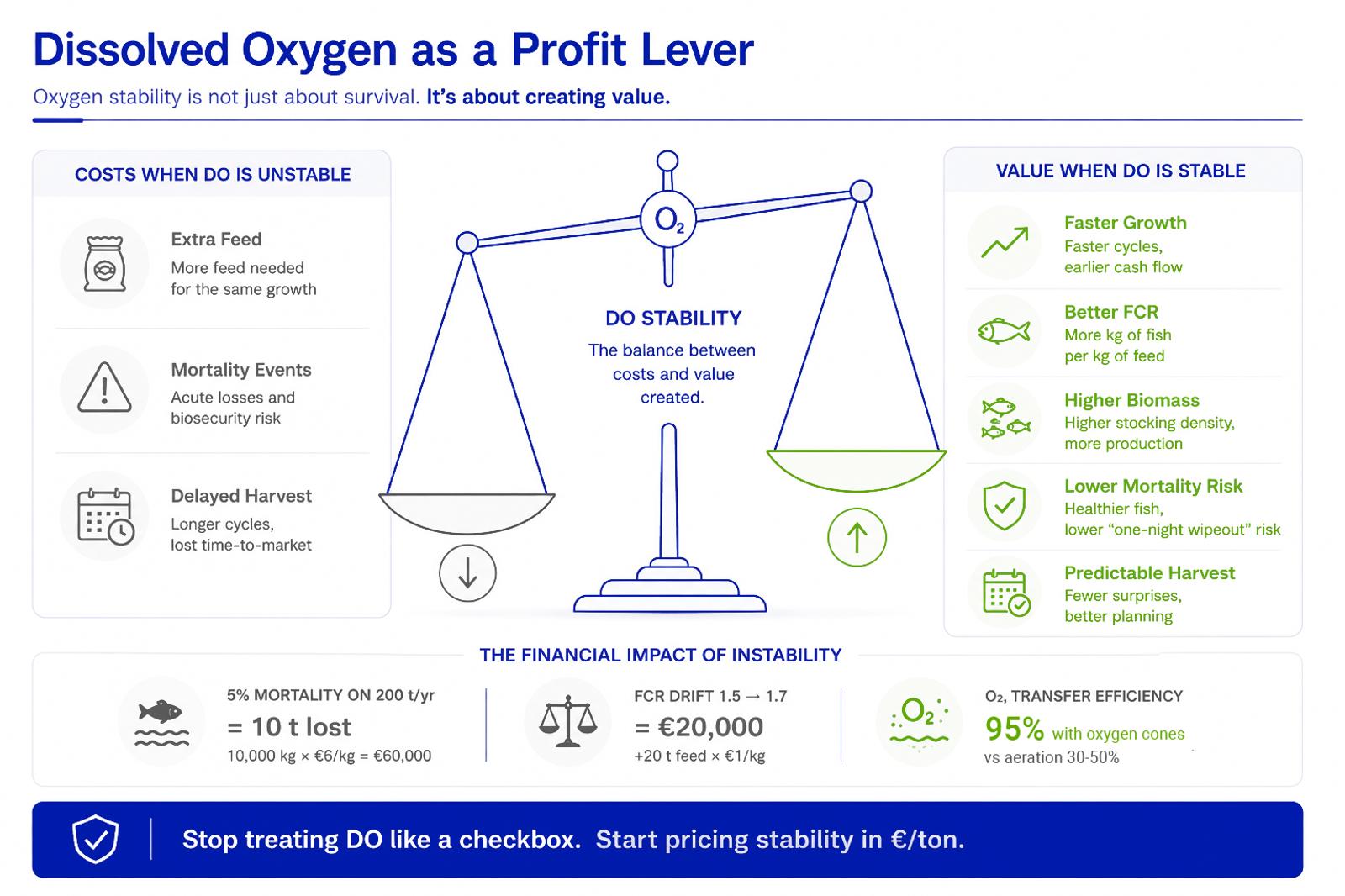
Dissolved oxygen is more than a compliance indicator. It supports fish metabolism and directly influences growth, feed utilisation, stocking density, and survival.
When DO levels remain within an optimal range, fish can direct more energy towards growth. When oxygen becomes limited, even moderately, metabolic activity slows, feeding behaviour declines, and production performance can begin to deteriorate.
This is changing how leading aquaculture operators approach oxygen management. Rather than asking only whether DO levels are acceptable, farms are increasingly considering whether oxygen conditions are optimised to support their production objectives.
Understanding the relationship between oxygen availability and biological performance is therefore essential when evaluating oxygen supply strategies for aquaculture.
Oxygen as a Strategic Production Input
Treating oxygen as a controllable production input allows farms to influence several important performance factors:
- Growth rate, by supporting efficient metabolic activity
- Feed efficiency, by improving feed utilisation
- Stocking density, by increasing system carrying capacity
- Production stability, by reducing oxygen-related variability
Effective oxygen management does more than help prevent losses. It can support higher biomass output, more predictable harvest planning, and greater consistency between production cycles.
As aquaculture operations become more intensive and margins more competitive, maintaining stable DO levels becomes increasingly valuable. Combined with a reliable supply system such as on-site oxygen generation, oxygen availability can be managed according to changing biomass levels and production requirements.
Dissolved oxygen therefore becomes a central operational and financial variable, rather than simply a background water quality parameter.
How Dissolved Oxygen Impacts Growth, Feed Efficiency, and Yield
Dissolved oxygen has a measurable influence on the biological processes that determine aquaculture performance. Oxygen availability affects how efficiently farms convert feed and production capacity into biomass and revenue.
Growth and Metabolism
Fish metabolism depends on adequate oxygen availability. When DO is maintained within an optimal range, fish can use feed effectively and direct more energy towards growth. This can support faster weight gain, shorter production cycles, and more predictable harvest schedules.
Even moderate oxygen limitations can reduce metabolic activity and feeding behaviour. These effects may not cause immediate losses, but they can gradually extend the time required to reach target weight and reduce annual biomass output.
Maintaining stable DO levels therefore helps farms operate closer to their biological production potential.
Feed Efficiency and Stocking Density
Dissolved oxygen also influences how efficiently feed is converted into fish biomass. Under optimal conditions, digestion and nutrient utilisation improve, supporting a better Feed Conversion Ratio (FCR). When oxygen becomes limiting, more feed may be required to achieve the same growth.
This relationship has a direct financial impact because feed often represents one of the largest operating costs in aquaculture.
Oxygen availability also affects the carrying capacity of a tank, pond, or recirculating aquaculture system. Stable oxygen conditions can help farms:
- Support greater biomass within the available space
- Maintain consistent feeding and growth
- Reduce variability between production cycles
- Increase output without immediately expanding infrastructure
Facilities evaluating oxygen generators for aquaculture should therefore consider not only oxygen volume, but also how consistently the supply system can respond to changes in biomass and demand.
Mortality Risk and Production Predictability
Severe oxygen depletion can cause acute stress and substantial stock losses. More commonly, fluctuating or suboptimal DO creates less visible problems, including uneven growth, inconsistent fish size, and delayed harvests.
Stable dissolved oxygen supports both biological performance and operational predictability. It allows farms to plan feeding, stocking, and harvesting with greater confidence.
The Hidden Cost of Oxygen Instability
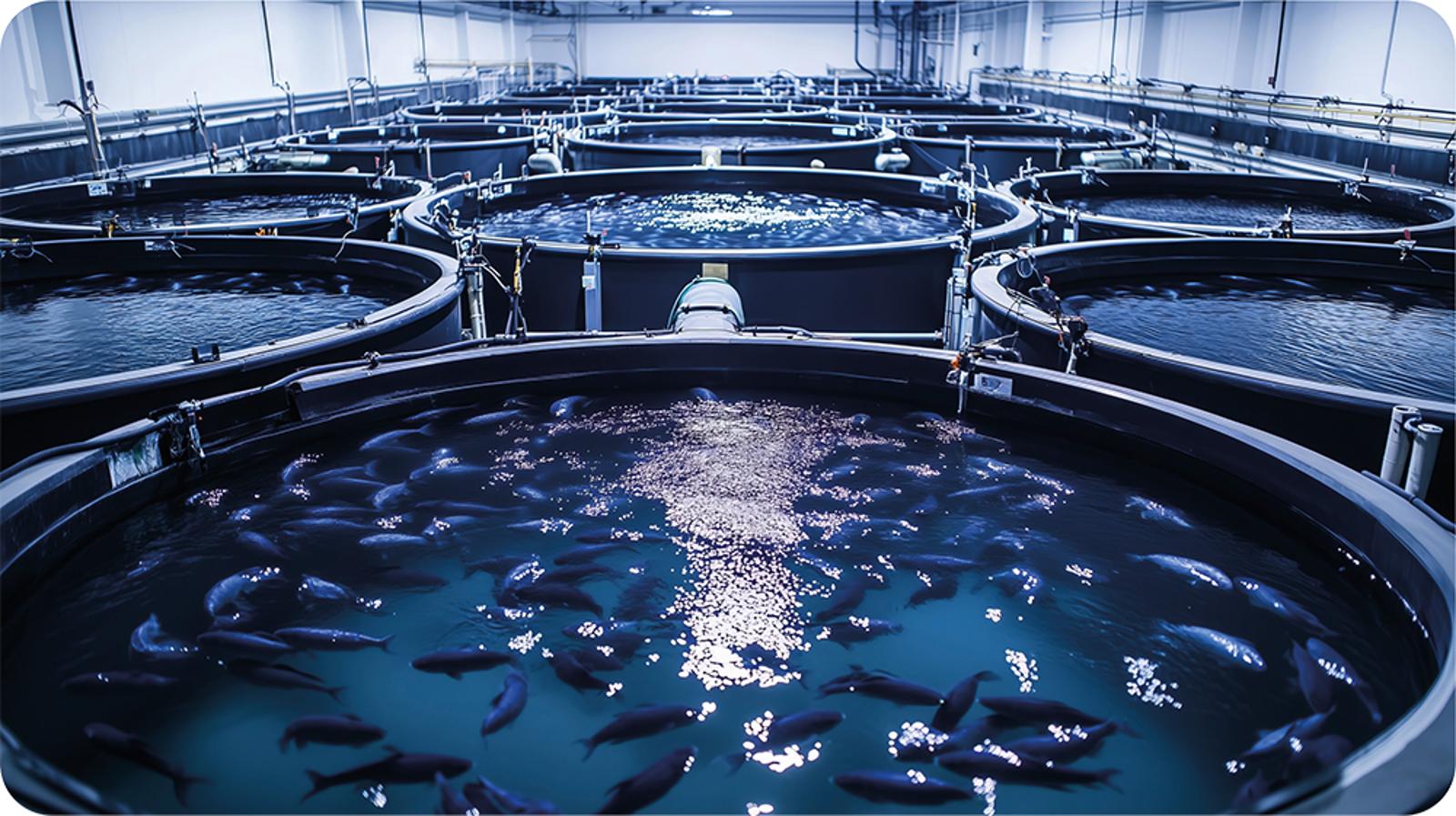
The benefits of optimal dissolved oxygen are relatively easy to recognise. The financial consequences of unstable or insufficient oxygen, however, are often less visible.
Aquaculture operations may lose efficiency not only during a complete supply failure, but also when DO levels fluctuate or remain below the optimal range during critical stages of production.
When Oxygen Supply Fails
A temporary interruption can cause dissolved oxygen levels to fall rapidly, particularly during periods of high biomass or elevated water temperatures. Fish may reduce feeding, experience acute stress, or, in severe cases, suffer mortality.
For a mid-sized farm, even a short disruption can result in:
- Loss of biomass and saleable production
- Immediate revenue loss
- Additional feed, labour, and recovery costs
- Delayed or partially affected harvests
Even a relatively small loss of stock can represent tens of thousands of euros per production cycle. Oxygen supply continuity is therefore an important operational and financial consideration, not simply a water quality concern.
Suboptimal Oxygen: A Less Visible Performance Drain
Complete outages are not the only source of financial loss. Farms operating with low or fluctuating DO may avoid mortality while experiencing a gradual decline in performance.
Reduced oxygen availability can lower feeding activity, slow growth, and negatively affect feed utilisation. Production cycles may become longer, while inconsistent development can make harvest planning more difficult.
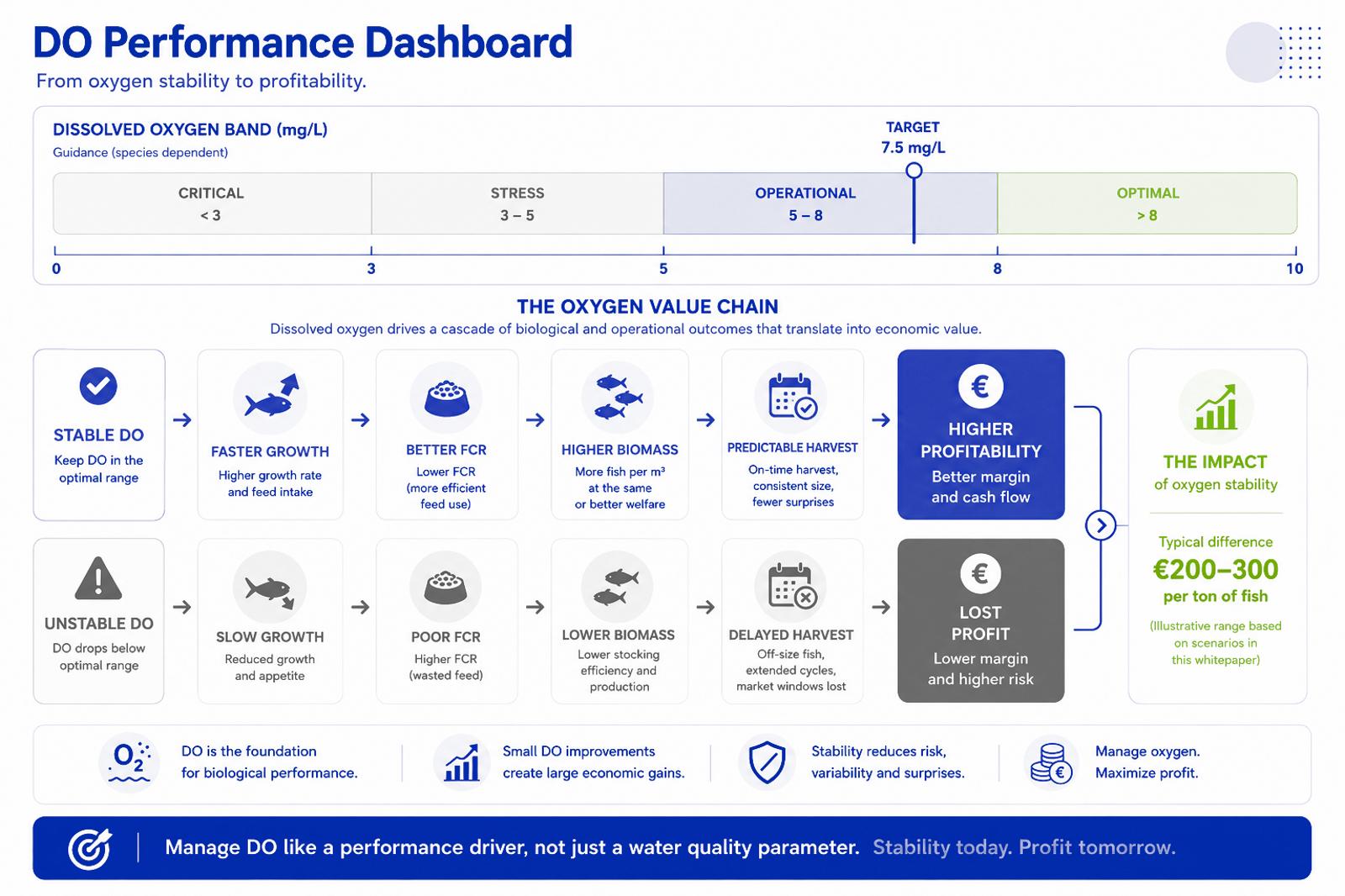
Across a full production cycle, oxygen instability may contribute to €200 to €300 or more per ton in additional feed and operating costs. The actual impact depends on the species, production system, biomass, feed price, water conditions, and severity of the oxygen limitation.
Why Oxygen Stability Creates Business Value
Stable dissolved oxygen supports predictable growth, consistent fish size, and improved planning accuracy. It also allows operators to respond more effectively to changing biomass and peak oxygen demand.
Farms evaluating [oxygen supply optimisation in aquaculture] should consider both average oxygen availability and the ability of their supply system to maintain stable conditions throughout the production cycle.
Oxygen stability helps move operations towards controlled, data-driven production management, reducing risk while protecting margins and production targets.
Oxygen Supply Strategies and Their Economic Impact
Biological demand is only one component of effective oxygen management. The way oxygen is supplied also influences cost, reliability, scalability, and the farm’s ability to respond to changing requirements.
Comparing Oxygen Supply Methods
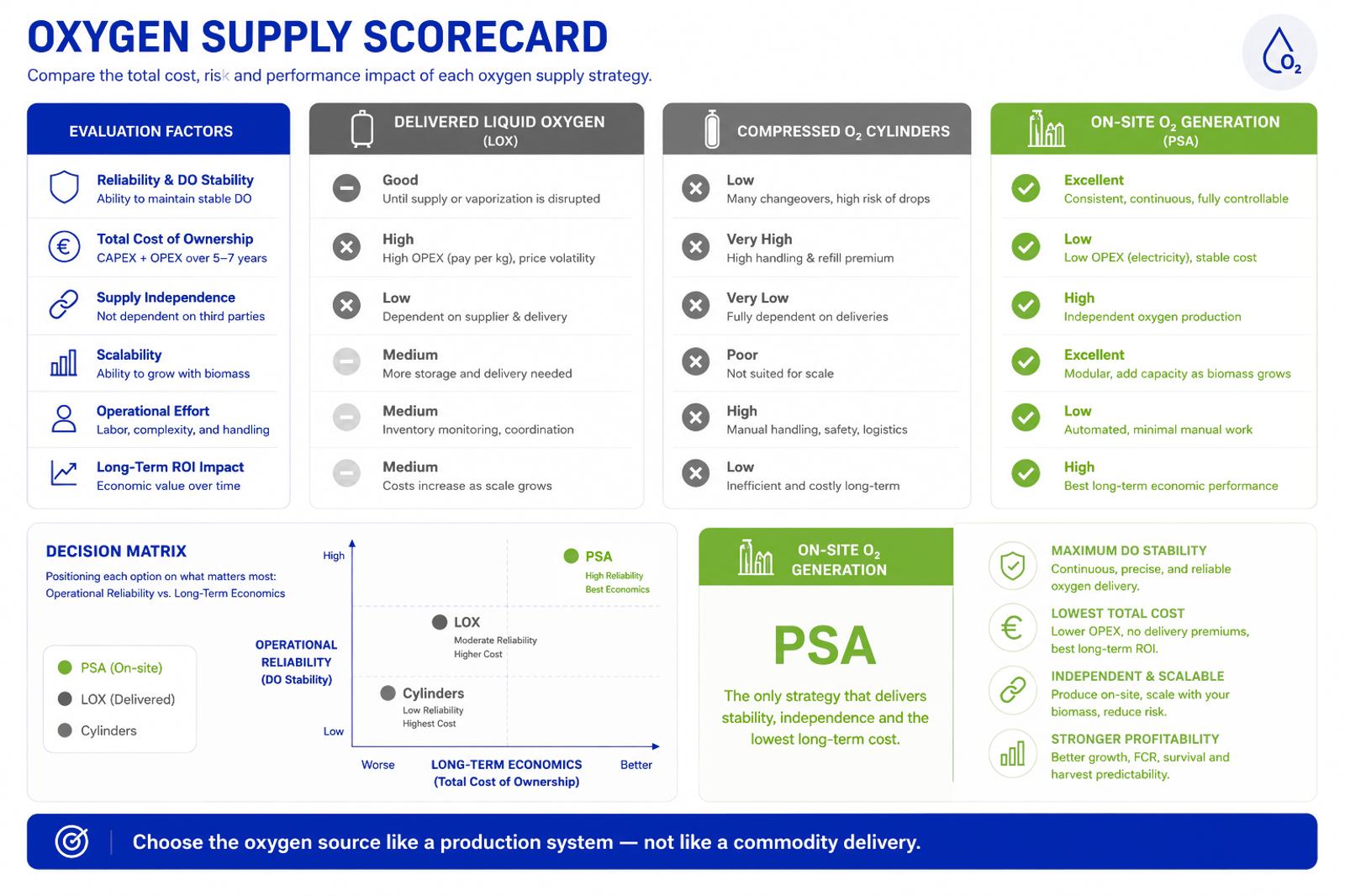
Aquaculture operations typically rely on three main supply methods:
- Liquid oxygen (LOX) can support substantial demand, but requires storage infrastructure, regular deliveries, and dependence on an external supplier.
- Compressed oxygen cylinders provide flexibility and relatively low initial investment. At higher volumes, handling, storage, and replacements become increasingly complex and costly.
- On-site oxygen generation, generally based on PSA technology, produces oxygen directly at the farm and can align supply more closely with production demand.
Each method can deliver the required oxygen, but its financial and operational implications differ considerably.
Operators assessing [oxygen supply solutions for aquaculture] should therefore look beyond purchase price and consider performance across the full production cycle.
Cost Structure: CAPEX and OPEX
LOX and cylinder supply are primarily based on recurring operational expenditure. As production and oxygen demand increase, farms continue to pay for oxygen, transportation, storage, and related logistics.
On-site generation requires an initial capital investment, followed by operating costs mainly associated with electricity and planned maintenance. This model can provide greater cost predictability and reduce exposure to changes in supplier pricing or delivery charges.
The preferred option depends on oxygen demand, energy prices, available infrastructure, production scale, and technical support. A Total Cost of Ownership assessment allows farms to compare these factors over a realistic operating period.
Reliability, Risk, and Scalability
Reliability is particularly important in aquaculture because interruptions can quickly affect fish performance and survival. Delivered supply remains exposed to transport delays, supplier availability, and storage limitations.
On-site generation reduces this dependency by producing oxygen at the point of use. When supported by appropriate maintenance, backup capacity, and system design, it can provide a more controlled and resilient oxygen supply.
Scalability must also be considered. As biomass and production capacity increase, the oxygen system must respond without creating new logistical constraints. Farms evaluating [on-site oxygen generation for aquaculture] should assess both current requirements and future expansion plans.
Selecting an oxygen supply strategy ultimately means balancing cost, continuity, and scalability rather than choosing on unit price alone.
From Cost Center to Profit Driver
As aquaculture operations become more intensive, oxygen supply is increasingly evaluated as a strategic business decision rather than a recurring operating expense.
From External Supply to Internal Control
Traditional supply models require farms to purchase oxygen continuously and coordinate deliveries according to production demand. This can limit cost visibility and expose operations to supplier availability, logistical disruption, and price changes.
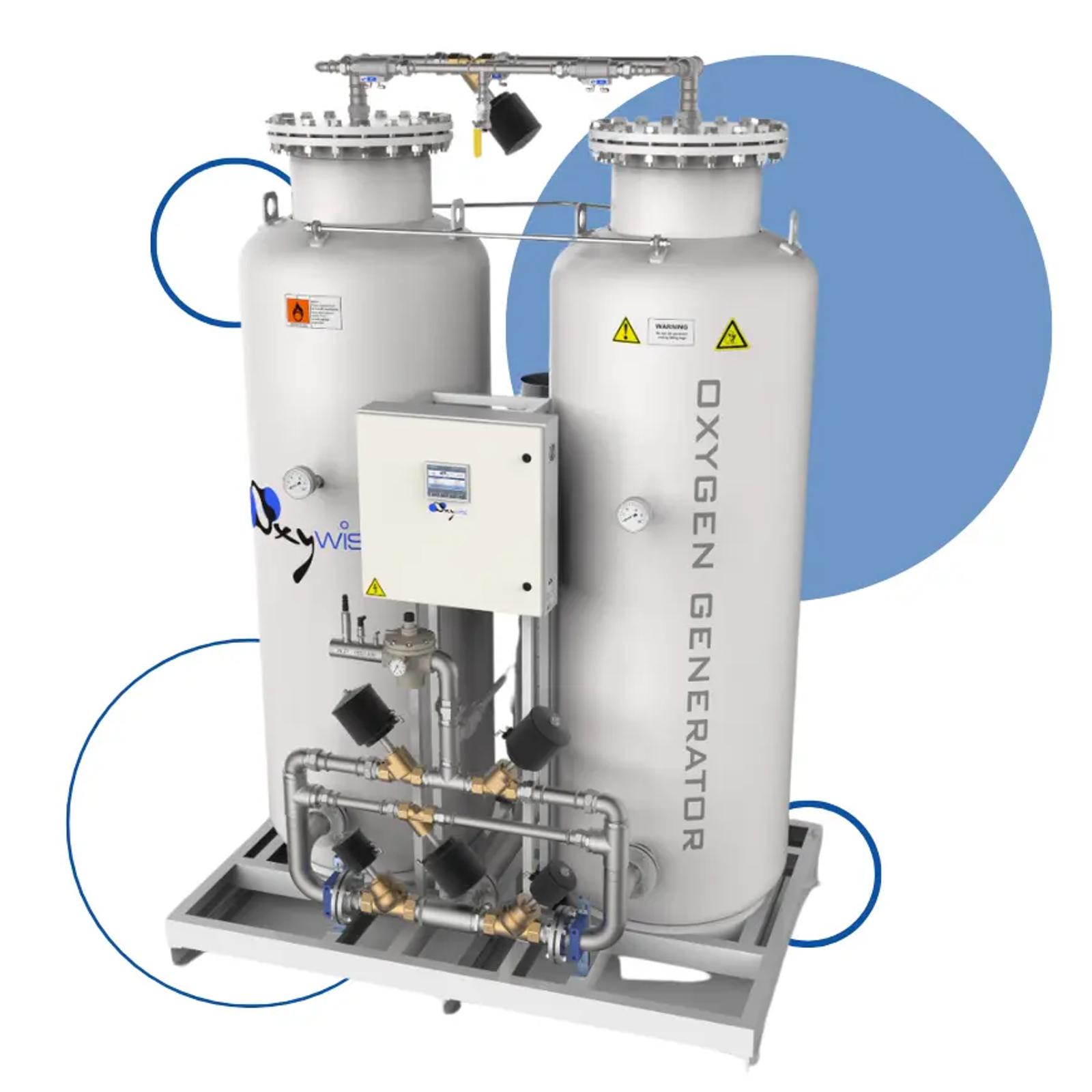
With on-site oxygen generation, oxygen is produced directly at the farm from ambient air. This changes the model from recurring external purchases to controlled internal production, allowing operators to align supply more closely with biomass levels and changing process requirements.
Aquaculture facilities exploring PSA oxygen generators should assess capacity, energy use, maintenance, redundancy, and future production growth as part of the investment decision.
When correctly sized and maintained, an on-site system can offer:
- More predictable oxygen costs
- Reduced dependency on deliveries
- Production based on actual demand
- Scalable capacity for farm expansion
The value extends beyond lowering supply costs. Greater control over oxygen availability can help farms maintain consistent DO, respond to peak demand, and reduce variability associated with delivered supply.
By treating oxygen as a controllable production resource, farms can connect supply decisions more directly with biological performance, stability, and long-term profitability.
Making Oxygen a Strategic Production Variable
Dissolved oxygen directly influences fish growth, feed efficiency, stocking capacity, production stability, and financial performance.
Farms that manage oxygen only as a minimum requirement may limit their biological and economic potential. Operators that monitor DO consistently and align oxygen supply with changing demand can improve predictability and respond more effectively to peak consumption.
Cost, reliability, scalability, and operational control must therefore be evaluated together. Treating oxygen as a strategic production variable can help reduce variability, protect production targets, and support sustainable growth.
Turn Oxygen Management into a Profit Driver
Every aquaculture operation has different production conditions, but the objective remains consistent: maintaining the oxygen availability required for healthy growth, efficient feed utilisation, and predictable output.
A clearer understanding of oxygen demand and supply can reveal opportunities to improve both biological performance and operating economics.
Download the aquaculture white paper to discover how a strategic approach to dissolved oxygen can support productivity, cost control, and long-term profitability.