Back to the product list

Cylinder Filling Ramp

High pressure cylinder filling ramp or filling manifold is used for filling cylinders with gases at pressures up to 450 bar.

We produce standardized ramps or there are also custom made filling ramps available.

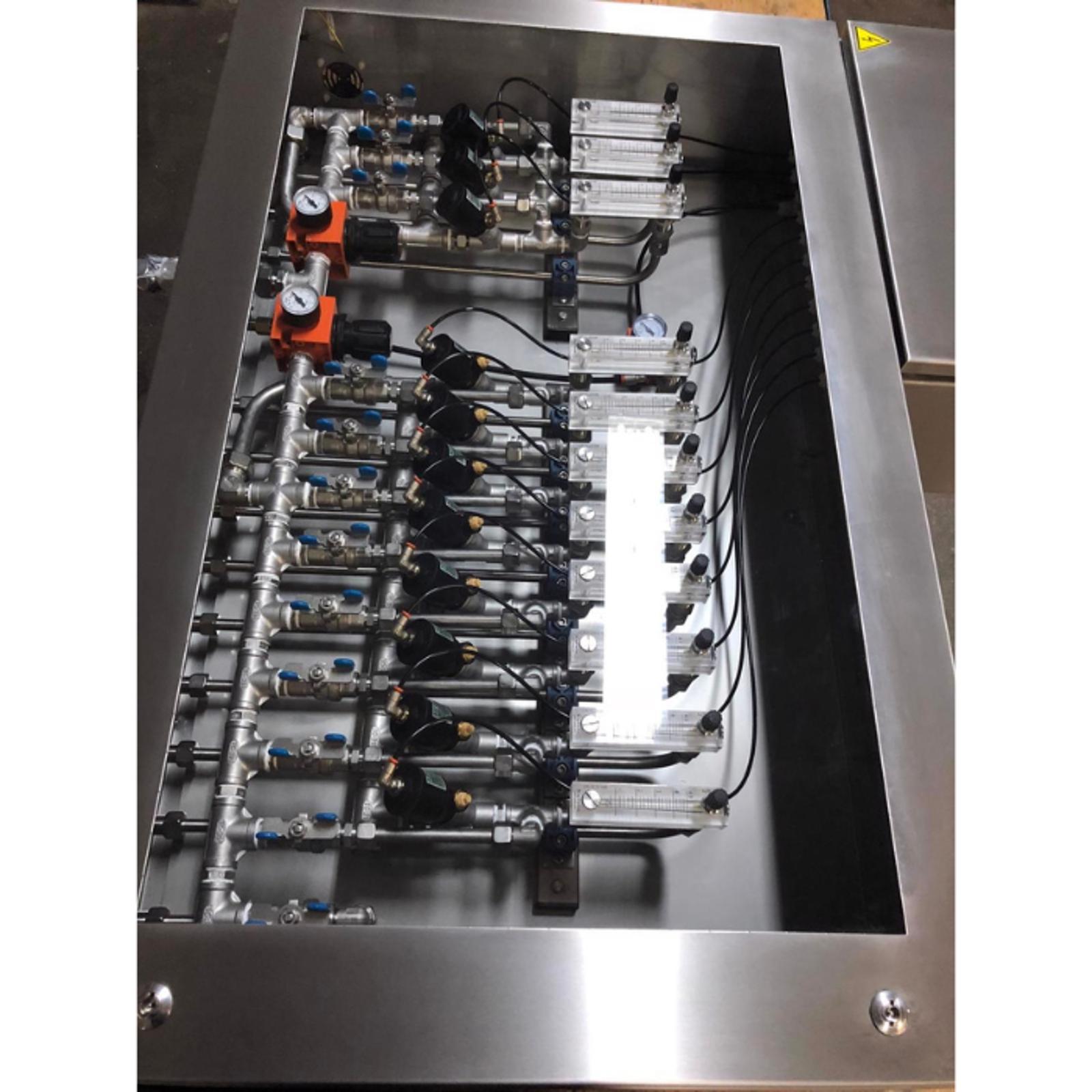
An example of custom made ramps represents a ramp which includes control system, two pressure gauges, two temperature gauges and two safety valves. Filling manifold has 20 flexible hoses for filling oxygen cylinders of various connections. In this case 10 connections CGA540 and 10 connections CGA870. The filling pump is controlled by the control panel, which is equipped by oxygen safety valve, thermometer, pressure gauge and pressure switch. Alarms on pressure and temperature switches block the operation of the oxygen pump, while it can be started again after all conditions are in safe zone.

Standard features

  • Equipped with all necessary and approved safety devices, pressure gauges, filling hoses
  • Gas type: oxygen and high pressure non corrosive gases
  • Storage rack for 4, 6, 8 or 10 cylinders as standard
  • Can be used as filling and/or reduction manifold
  • Ideal second or emergency back up gas supply (automatic change over manifold)

A cylinder filling ramp is a system designed to enable the safe and efficient filling of multiple gas cylinders from a single gas source. Oxywise cylinder filling ramps provide a structured and controlled way to manage cylinder filling operations, supporting consistent pressure distribution and organized handling of gas cylinders.

This solution is widely used in on‑site oxygen and nitrogen systems where cylinders are filled regularly for storage, transport, or decentralized use.

The primary purpose of a cylinder filling ramp is to distribute pressurized gas from a central source to several cylinders simultaneously. Instead of filling cylinders one by one, a filling ramp allows operators to connect multiple cylinders and manage the filling process in a coordinated and efficient manner.

Oxywise cylinder filling ramps are designed to support predictable filling workflows and improve operational efficiency in facilities that rely on cylinder‑based gas supply.

Managing multiple gas cylinders without a dedicated distribution system increases the risk of inefficiency and operational error. A cylinder filling ramp introduces structure by organizing gas connections, valves, and filling points within a single interface.

This organized configuration simplifies daily operations, supports repeatable filling procedures, and helps maintain oversight of the filling process, especially in high‑activity environments.

Cylinder filling requires careful control of pressure to ensure safety and consistency. Cylinder filling ramps are designed to manage gas flow and pressure distribution in a controlled manner, reducing the likelihood of over‑pressurization or uneven filling.

By centralizing control elements, the ramp contributes to safer handling practices and supports compliance with established gas handling procedures.

Oxywise cylinder filling ramps are designed to integrate seamlessly with oxygen generators, nitrogen generators, compressors, and gas storage systems. This integration allows facilities to create a complete on‑site solution that includes generation, compression, and cylinder filling within a coordinated system layout.

Such integration simplifies system design and ensures compatibility between all components involved in the gas supply chain.

Many facilities rely on cylinders to supply gas to areas not connected to fixed pipelines. A cylinder filling ramp supports this decentralized distribution model by enabling consistent and efficient cylinder refilling.

This approach is particularly useful in environments where gas must be transported to multiple workplaces, mobile units, or remote applications.

FAQs

A cylinder filling ramp is a system that allows multiple gas cylinders to be filled from a single gas supply source at the same time. It provides an organized interface with connection points, valves, and controls that help manage gas flow and pressure during the filling process.